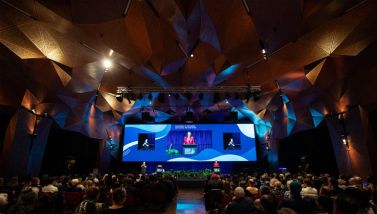
Launch of NGO Guidelines for Working with Trafficked People
The Hon Catherine Branson QC
President, Australian Human Rights Commission
Commonwealth Parliamentary Offices
70 Phillip Street, Sydney
3 March
2009
I would like to begin by acknowledging the Gadigal people of the Eora nation, the traditional owners of the land on which we meet today and pay my respects to their elders.
It is my great pleasure to be here with the Minister for Home Affairs and Associate Professor Jennifer Burn to launch the NGO Guidelines for working with trafficked people.
I know that Elizabeth Broderick – the chair of the National Roundtable on People Trafficking Working Group which produced these Guidelines – is deeply disappointed that she can not be here to congratulate personally everyone involved. Liz is in New York as a member of the Australian delegation to the United Nations Commission for the Status of Women.
Last year I relinquished my role as a Federal Court judge to start work as the President of Human Rights Commission. This transition has prompted me to think carefully about the best ways to promote greater understanding and protection of human rights. I’ve learnt a lot from watching Liz Broderick, and the other Commissioners, work and perhaps the most important lesson is that we are never so effective as when we work together.
NGOs play a vital role in raising community awareness of trafficking and in directly assisting trafficked people. The production of the Guidelines is a testament to what can be achieved when NGOs and Government agencies pool their experience and expertise to make sure those who have their human rights violated in Australia get the support and assistance they need.
I want to congratulate Minister Debus for the leadership he has shown in establishing the National Roundtable on People Trafficking as an ongoing forum for NGOs and Government agencies to work together. I also want to pay special tribute to Jennifer Burn, the Director of the Anti-Slavery Project, for devoting the same expertise and energy that she brings to advocating on behalf of trafficked people to the production of these guidelines.
There is, of course, no way to undo the abuses experienced by victims of trafficking or reclaim the time they spend in servitude. But we can ensure that we help people who have been trafficked recover from their experiences, obtain information about their legal rights and options, and receive the type of respectful and culturally appropriate services they deserve.
These guidelines are about making sure that trafficked people get access to the best possible support. They provide practical advice to NGOs working with the victims of all forms of trafficking on topics such as responding to subpoenas, protecting the safety and privacy of trafficked people, providing support during criminal trials, and identifying culturally appropriate services. There is also a referral guide that lists the phone numbers of all the services that can help trafficked people.
The Guidelines are accompanied by a two-page ‘Know Your Rights’ fact sheet which tells trafficked people how they can get advice about their visa status, contact police and get support from the NGOs and the government agencies represented here today. Trafficked people are usually non-citizens and – as the Guidelines explain – they may have little or no information of their rights under Australian law. This fact sheet has been translated into Thai, Vietnamese, Korean, Chinese and Tagalog so trafficked people can get the information they need, in the language they speak.
These Guidelines are a blueprint for best practice that should prove invaluable to established anti-trafficking NGOs and organisations helping trafficked people for the first time. I hope that they will be widely distributed among anti-trafficking NGOs, victims of crime support organisations, welfare agencies, and unions, so we can create greater community awareness about all forms of trafficking, including those forms of trafficking – such as trafficking for forced labour in construction and hospitality industries – about which too many of us know too little.
The damage that trafficking causes to the lives of women, men and to Australia reminds us that not everyone in Australia enjoys the rights most of us take for granted. The right to be free from slavery and servitude. The right not to be forced to work or exploited through debt bondage. I suspect many people do not even realise that practices like slavery take place in 21st century Australia.
But I am sure that everyone here knows that too often it is those who have suffered the greatest human rights violations who face the greatest obstacles accessing justice. Some people who have been trafficked will not realise that what has happened to them is a crime under Australian law. The right to an effective remedy – including compensation – when rights have been violated will always remain elusive if you do not know what your rights are or how to get legal advice. My hope is that the Guidelines and the ‘Know Your Rights’ fact sheet will help trafficked people get the support and information they need to recover from their ordeal and enjoy their legal rights.
I am aware that many NGOs here today have ideas about how to strengthen the protection of trafficked people and about how to develop strategies to prevent trafficking. NGOs are in a unique position to identify the gaps in Australia’s protection of human rights because it is so often NGOs who help people that have fallen through them. It was NGOs who placed the public spotlight of the plight of trafficked women and it is NGOs who argued so persuasively that Australian laws and policies must provide greater protection for the rights of those targeted by traffickers.
It is in this context that I would like to mention the Australian Government’s National Human Rights Consultation which is now underway, led by a committee chaired by Father Frank Brennan. I encourage you all to get involved in the National Human Rights Consultation and share your experiences, expertise and ideas about how we can strengthen understanding and protection of human rights in Australia. You might think that this can be done in any number of ways - through law reform, through education or by identifying new ways – like the National Roundtable on People Trafficking – to bring community stakeholders and government together to collaborate on urgent human rights issues. Think of sharing your views with the committee.
Let me conclude by congratulating everyone who has been involved in the production of these practical tools for helping trafficked people. It is unfortunate that sometimes debates about how to improve rights protection in Australia are portrayed as a stand-off between those who say everything is fine and those who say everything is wrong. I hope that the ongoing work of the National Roundtable on People Trafficking will continue to be an illustration of what can happen when we bring people together and ask one simple question: what can we do better?