
SETTING THE SCENE
 Disability Rights
SETTING THE SCENE
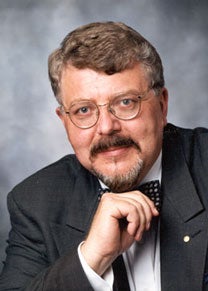
| Dr Sev Ozdowski OAM, Acting Disability Discrimination Commissioner HREOC Telecommunications Forum |
 |
It is my pleasure to acknowledge:
- Attorney-General the Hon Phillip Ruddock MP,
- congratulations on your commitment already shown since taking the new portfolio to the issues faced by people with disabilities;
- we shared earlir this month in the launch of the Bus Industry Cofederation's access guidlines;
- thank you for being with us today
- The Hon Warwick Smith, Forum Chair - tested friend and champion of people with disabilities.
My warm welcome goes to all the telecommunication forum participants:
- Representatives of companies within the telecommunications industry
- Representatives of government departments;
- and most importantly representatives of people with disabilities who are clearly disadvantaged in there access to communications.
Allow me also to say thank you to:
- Mr Alan Horsley from the Australian Communications Authority who has provided us with very positive advice in the planning and organisation of this forum;
- and to acknowledge individually Ms Johanna Plante from the Australian Communications Industry Forum and Mr Graham Chalker from the Australian Mobile Telephone Association who we look to, as leaders from relevant industry bodies, to take many issues forward following today's discussions.
May I commence by acknowledging the traditional owners of the land on which we meet today and by doing so remind ourselves that Australia's cultural traditions stretch back many thousand of years.
The Attorney-General has very clearly outlined our purpose for today. It is, as he has said:
- to work co-operatively through the recommendations in HREOC's discussion paper, and
- to develop a workplan for the future.
This will address the areas where people with disabilities are currently being discriminated against.
Thank you, Attorney, for setting this direction so clearly, and for speaking so positively about work in other areas - such as increases in TV captioning - where HREOC has adopted this cooperative approach so successfully.
The Australian telecommunications industry is modern and competitive.
Its products and services are woven into the fabric of Australian society and it helps to overcome the "tyranny of distance".
Therefore equitable access to telecommunications should be regarded as a basic human right for all Australians. The universal service regime confirms this right. The definition of standard telephone service recognises text connectivity as an appropriate substitute to voice communication for people who are deaf, and people with speech-hearing disabilities who require it.
In fact, universal access is envisaged for all Australians. The network is modern and efficient, and customers have a variety of means for telecommunications: fixed telephones, terrestrial or satellite wireless phones, and access to the internet. A strong feature of the telecommunications system in Australia is universal geographic accessibility.
However, the situation for people with disabilities - facing barriers of both affordability and accessibility - is not so positive. Many people with disabilities in Australia cannot exercise their basic right of access to telecommunication on the same basis as the rest of society.
Let me give you some practical examples:
If you are deaf, or need to use a text phone for some other reason, you have unreliable access to the mobile phone network in Australia. This is despite the fact that there are now more mobile phones in Australia than fixed phones, and the number of mobiles is growing rapidly. Further, many switchboards prevent access using text phones. Your only option is SMS, which is not real time communication.
If you have a hearing impairment, it is quite likely that you will not be able to use a standard telephone because it does not have a volume control. Further, it is also likely that some mobile phones will interfere with your hearing aid.
If you are an older person with low vision, or a person with limited manual dexterity, you will probably have problems using mobile phones with small keypads, as well as many regular phones where the keys are not clearly separated or labelled.
If you are a person who is blind you will probably not be able to use SMS, or most of the standard features on mobile phones because there is no alternative to seeing the screen.
For these groups we have not achieved universal access.
That's what this forum is all about.
But, you might ask, how these issues relate to the DDA?
We have circulated a paper on this question which, in summary, makes the following points:
- Telecommunications service providers are obliged to provide equipment which is accessible to and useable by people with disabilities. This obligation is not restricted to services covered by the Standard Telephone Service and Universal Service Obligations, and includes mobile phones. This obligation may be met by making equipment accessible, or by providing an accessible alternative.
- Where such specialised equipment is provided it must provide the same choices and be at the same cost as that generally available. For this and other reasons, universal design is normally a better alternative. This is supported by the application of the DDA to relatives and associates.
- Standards and Codes under the telecommunications Act will be a benchmark in determining breaches of the DDA. Standards are very important because they provide certinity and clarity.
For all of these reasons, the development of consistent Standards or Codes in this area could benefit industry and regulators. Such Standards or Codes, even if voluntary, would become benchmarks if DDA complaints were lodged. Also, such Standards or Codes could provide a basis for exemption applications under the DDA.
The access problems which I outlined caused us, earlier this year, to commission and release the "When the tide comes in" discussion paper. This paper was distributed electronically some 5 months ago.
I don't need to take you through the details of that paper - much of our focus for today will be dealing with:
- its recommendations,
- plus the discussion papers and comments which all of you have submitted.
But I felt that it was important to remind you of the background to this forum, because that will allow us all to more clearly focus on our objectives.
There are a number of issues in the original discussion paper which are not on our agenda today. I want to briefly explain that, and HREOC's intentions regarding those issues.
Recommendation 2: Broadening the Copyright Act exemption for Radio for the Print Handicapped programming to include internet streaming: As the Attorney has already mentioned, this issue is being taken up within Government, and the Attorneys initiatives will be supported by HREOC.
Recommendation 4: Co-operation and information between the Telecommunications Ombudsman and HREOC on telecommunications complaints - it is being discussed between these two organisations.
Recommendation 5: Inclusive public procurement policies based on s 508 of the United States Rehabilitation Act that mandates that any technology purchased by government needs to be disability accessible - it is a whole of government issue which I am currently taking up.
Recommendation 19: Monitoring and reporting on ongoing developments through the US regulatory regime is again something which HREOC, and no doubt also the Australian Communications Authority, will do.
Recommendation 21: Funding arrangements for accessible video telephony: This is a very new technology which promises videophones for AUSLAN users. Our pre-forum discussions led us to the view that, whilst this is a key issue in the medium term, it is not one which could have been advanced to any great extent today.
Recommendation 24: Private Payphone Accessibility: Again following pre-forum discussions it was felt that it would be better to see what directions were taken today on public payphones before embarking on the private payphone issue.
Recommendation 26: Contributing to the World Summit on the Information Society: Is an issue I am taking up with the Minister for Communications.
You may not always share HREOC's view on how some or all of these issues should be handled. But let me assure you that we do not dismiss their importance, and will be pursuing them in the future.
Finally, may I thank you, Warwick, for agreeing to chair what will, I believe, be a day of positive if sometimes energetic discussion. And may I thank all of you as participants, for agreeing to represent your organisations during a day which will, I believe, lead to the continuation of some productive partnerships, and the establishment of others.
Today is not the day for us to discuss detailed and technical telecommunications issues - most of you understand those much better than I and HREOC do.
Today is not the day for us to set out current problems and positions - these are all detailed in the various papers which have already been circulated.
Today is the day for us to find solutions, or to develop partnerships which will lead to the finding of these solutions.
So let's grasp the opportunity before us. By doing so - and by including people with disabilities in those partnerships
- less DDA complaints will be lodged,
- more barriers will be removed, and
- our telecommunications system will be more available to more Australians.
Thank you.

