Australian Human Rights Assessment 2026
Explore the state of human rights in Australia in 2026, examining progress and challenges across key areas of human rights protection and accountability.

Summary
In this inaugural annual assessment of Australia’s contemporary human rights record, the Australian Human Rights Commission provides an evaluation of how well Australia is protecting people’s human rights.
The Australian Human Rights Assessment 2026 is the first of what will be an annual assessment of Australia’s track record in relation to promoting and protecting human rights.
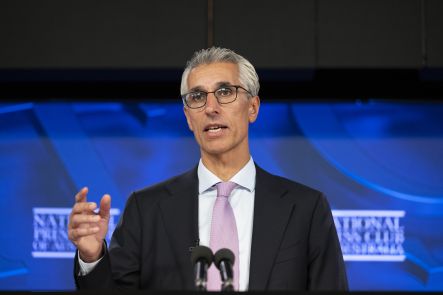
The 2026 Assessment was profiled in an address at the National Press Club of Australia by our President Hugh de Kretser in late April 2026. Other supporting material includes:
- 2026 Australian Human Rights Assessment report card
- 2026 Australian Human Rights Assessment fact sheets
National Press Club of Australia address | AHRC President Hugh de Kretser
President de Kretser's National Press Club address took place on Wednesday 29 April 2026 and was attended by a range of leaders across the government, legal, business, community and civil society sectors. It was also broadcast on ABC TV.
You can watch a recording of the speech below. Read a transcript of the speech.
Photo courtsey of Fernanda Pedroso and National Press Club of Australia.
2026 Assessment report card
To improve human rights in Australia we need to regularly identify what the key human rights challenges are and identify where governments need to do more or do better to protect everyone in Australia.
This report card is intended to be a starting point for building better dialogue about human rights in Australia. The goal is to improve the accountability of governments in relation to how they protect the rights of every person in Australia.
In this report card, we’re providing a snapshot of how well our human rights are being protected in Australia right now. We’re assessing the current state of human rights protection against 6 key categories (see below).
Please note this report card provides a general overview rather than a comprehensive evaluation. For more detailed assessments of specific issues, please refer to our 2026 Assessment fact sheets (see below).
Report card categories
Download the report card
About the 2026 Assessment report card
This report card provides an overview of Australia's current track record in relation to advancing and protecting human rights
2026 Assessment fact sheets
Our 2026 Assessment draws on the outcomes of 2 recent and significant global reviews of Australia’s human rights performance as well as a selection of other local and global data sources, reports and assessments.
2026 Universal Periodic Review
In January 2026, the Australian Government appeared before the UN Human Rights Council for our fourth Universal Periodic Review (UPR). The UPR sees countries from across the globe identify their concerns about and recommendations for improving human rights in Australia. 122 countries participated, making 344 recommendations to Australia.
Crucially, as part of the UPR, the Australian Government issued a national report on the current status of human rights protection in Australia. The Australian Human Rights Commission also issued a report and separate reports were issued by a coalition of over 100 non-government organisations in Australia and by the UN Office of the High Commissioner for Human Rights.
2026 CESCR Review
Then in February 2026, Australia appeared before the UN Committee on Economic, Social and Cultural Rights for a periodic review of how well Australia is protecting rights to education, health, work conditions and adequate housing, among others.
AHRC findings
The Commission has combined the content of these 2 reviews with findings across a range of reports and submissions made by the Commission over the past 12 months to create relevant 20 fact sheets which provide a more detailed assessment of specific issues (see below).
2026 Assessment fact sheets
Download the fact sheets
About the 2026 Assessment fact sheets
The fact sheets provide information on issues raised in the report card as well as findings from a range of reports and submissions made by the Commission over the past 12 months.